The results for Four in February are in!
Yawn Good >insert timezone< friends. It's early-ish in the morning for me as I sit down to write this blog, the sounds of the Guilty Gear X soundtrack blasting through my headset, casually sipping coffee in between. It's a a good day. I need to listen to that soundtrack more...there's some real bangers throughout the entire series of games. Does it make sense to call something your favorite fighting game franchise solely based on the music?
yes. I've just ruled that it does.
Speaking of favorites, I once got so hung up on the question of “what's your favorite game” that I made an entire presentation outlining my favorite games based on genre. It was, like, almost 40 slides long. I made it in 2018, so I think it's time to revisit that... Are you interested? Toot @ me https://gamerstavern.online/@sunie
I find this preamble ramble quite useful to get to actually writing the post I've set out to do. I'll try to keep it brief but it helps to rev up the proverbial engine. Make sense?
Alright! So! At the start of the month I've set a challenge for myself, and that was to beat four games in February. I am stoked to tell you I have succeeded, and I'm here to tell you about what I've played and give y'all some mini-reviews.

En Garde!
★★★☆☆ En Garde! has been on my backlog for a while now. You play as Adalia de Volador, a daring swashbuckler that stands up against a tyrannical count-duke that terrorizes her town with ridiculous laws and taxes. It's a humorous game for sure, and the bright and colorful graphics were a joy to look at.
The game couples flashy swordplay mechanics with environmental interaction, making every encounter a sweet little sandbox of mayhem and comedy. Enemy on top of a flight of stairs? Kick him! Surrounded? Pick up a roast chicken off of the table and cover one's head while kicking the table towards the rest. A loaded cannon aimed at unsuspecting guards? You already know what to do.
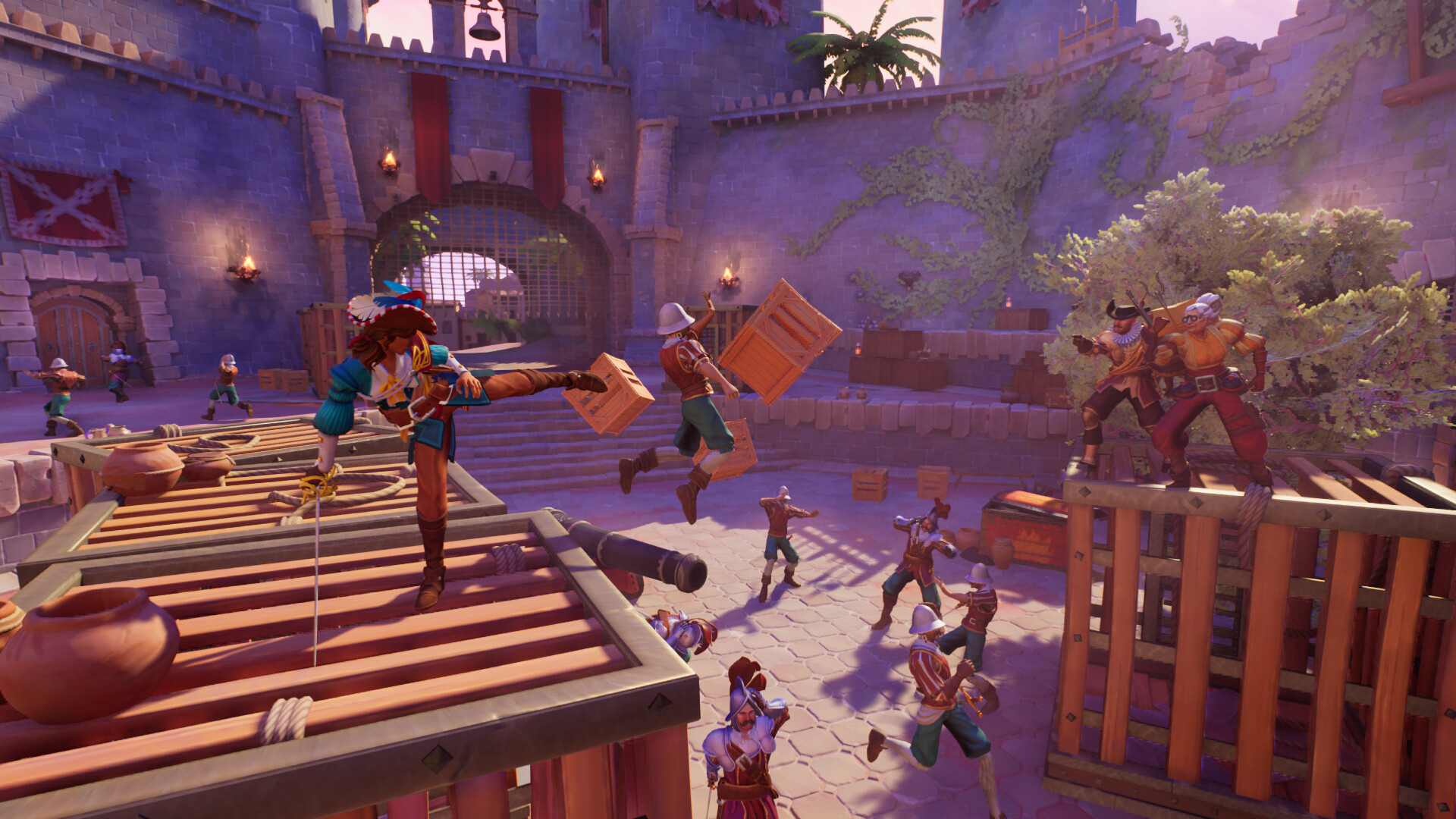
I've definitely enjoyed my time with the game, but it wasn't without its frustrations. Due to the game's short length of about four hours, it wastes no time throwing pretty much every mechanic at you from the start, so by the time you've reached the fourth and final level there aren't much surprises left. The enemies are also quite relentless and constantly had me on the back foot, running away from them and towards a single use stage gimmick to take one or two out at a time. See, you can only directly cross blades with one enemy. If you get surrounded, you can't “Arkham” or “Assassin's Creed” your way by countering every blow that comes at you. You're forced to roll away and split up the enemies to thin out their numbers. I felt less like a cool and competent swordfighter and more like Kevin from Home Alone, luring enemies into my traps and generally feeling overwhelmed. This could very well be a me thing! I like a challenge, but this one didn't click with me.
Now, the saving grace here is that this game was originally a student project that got blown up into something bigger. I have a weakness for these kinds of projects, and there is so much heart in this that I can't be mad at the things I disliked. On the other side of that coin, I'm disinterested into going back into the challenge levels or 100%ing the game for the same reasons.

Dispatch
★★★★★
The second game was Dispatch and boy oh boy this one has my name written all over it. I've always loved interactive fiction games. Games like Dragon's Lair, Space Ace and later games like The Walking Dead and The Wolf Among Us are just 100% my shit.
The game is set in a world of superheroes and supervillains. We follow Robert, whose Iron Man-esque suit got destroyed during an encounter with his nemesis. But just as his career as Mecha Man seems over and done with, he gets a job offer from SDN, the Superhero Dispatch Network. There, he is faced with dispatching a ragtag group of low tier ex-villains that want to redeem themselves and become heroes.
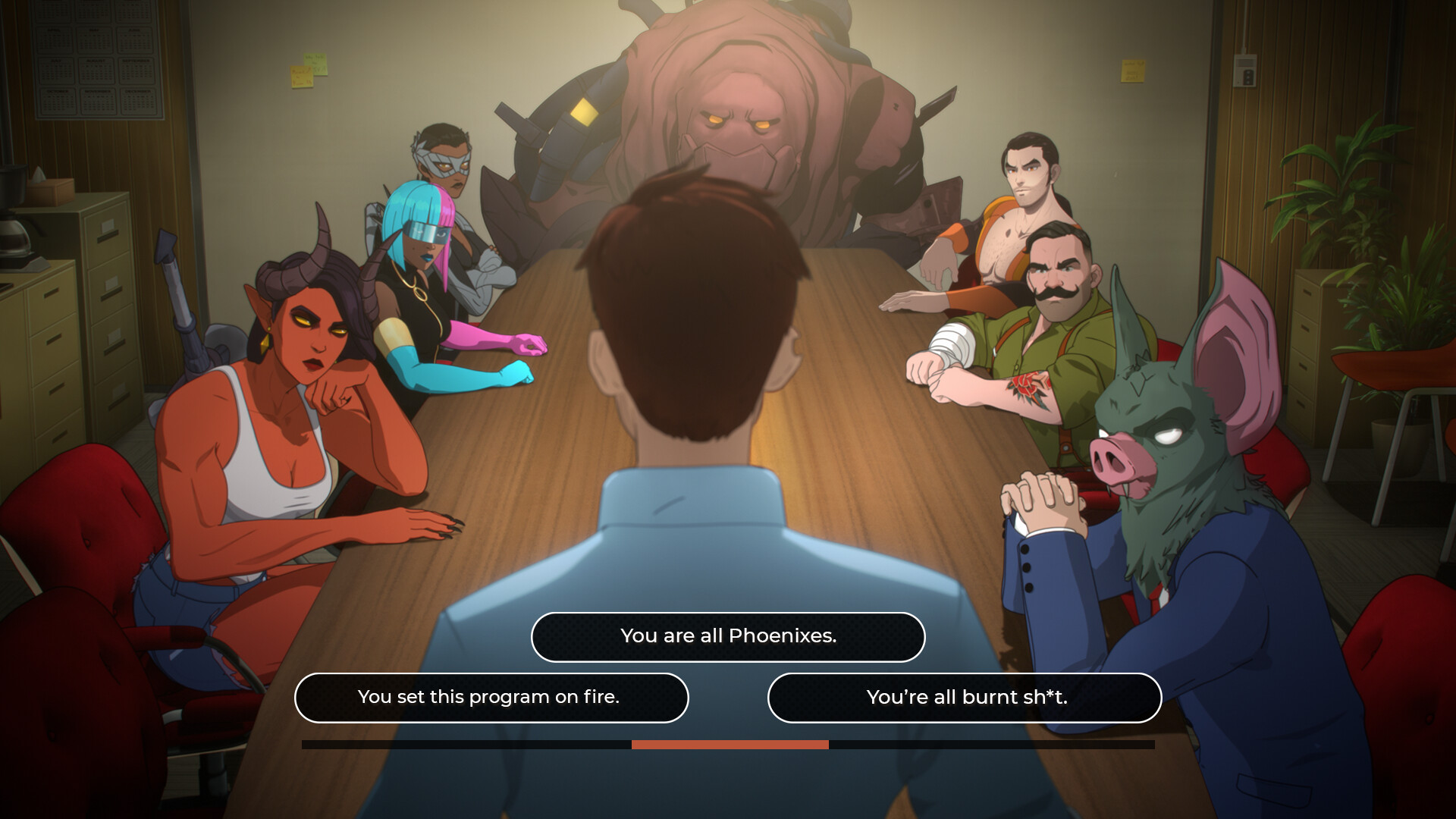
Now, your choices matter in this game so it wouldn't do for me to divulge more of the story. In the typical style of Telltale's The Walking Dead (AdHoc Studios is made up of ex TT-devs), the flow of the story is dictated by your actions and even though some events are set in stone, the context that you create brings a personal touch to the proceedings.
There's more than just watching Dispatch and occasionally making a choice though. There's a few Quicktime Events if Robert ends up fighting (which can be disabled if you don't like them) but the meat of the gameplay is the actual Dispatching. You send out the members of your team to all sorts of tasks, from rescuing cats out of trees to stopping an international supervillain. How WELL they do is based on their stats, which you get to increase when they rank up. Reading the task and sussing out what kind of skills are needed is how you do well in these moments, and there's even a (quite original) hacking minigame to break up the action.
The tone of Dispatch definitely leans more towards “Invincible” rather than most of Marvel's output. There's mature dialog, risque situations and the game doesn't shy away from nudity. The squeamish (or the folks that are scared of videos getting demonetized) can opt to censor that stuff, though leaving it on creates a very solid and mature identity overall that doesn't go too over the top.
I definitely recommend experiencing this game any way you can, either by playing it yourself or by tooting at me to stream it so you can just watch it like a Saturday morning cartoon. I wouldn't mind playing this again.

Beyond Shadowgate
★★★★☆
I absolutely adore the original Shadowgate, specifically the NES version. The music, atmosphere and writing make for a unique package. Death lurks around every corner but it's so hilariously abrupt at times (and not very punishing) that you almost WANT to find all the ways you can end your life.
...gosh the things people say that only work in the context of video games, huh?
Anyway, Beyond Shadowgate is based on the original draft of the sequel, that got thrown out in favor of whatever ended up hitting the Turbografx-CD. It's helmed by the original developers, and it shows. This game retains the tone, aesthetic and unrelenting murderous attitude of the NES original, and I love it for it.
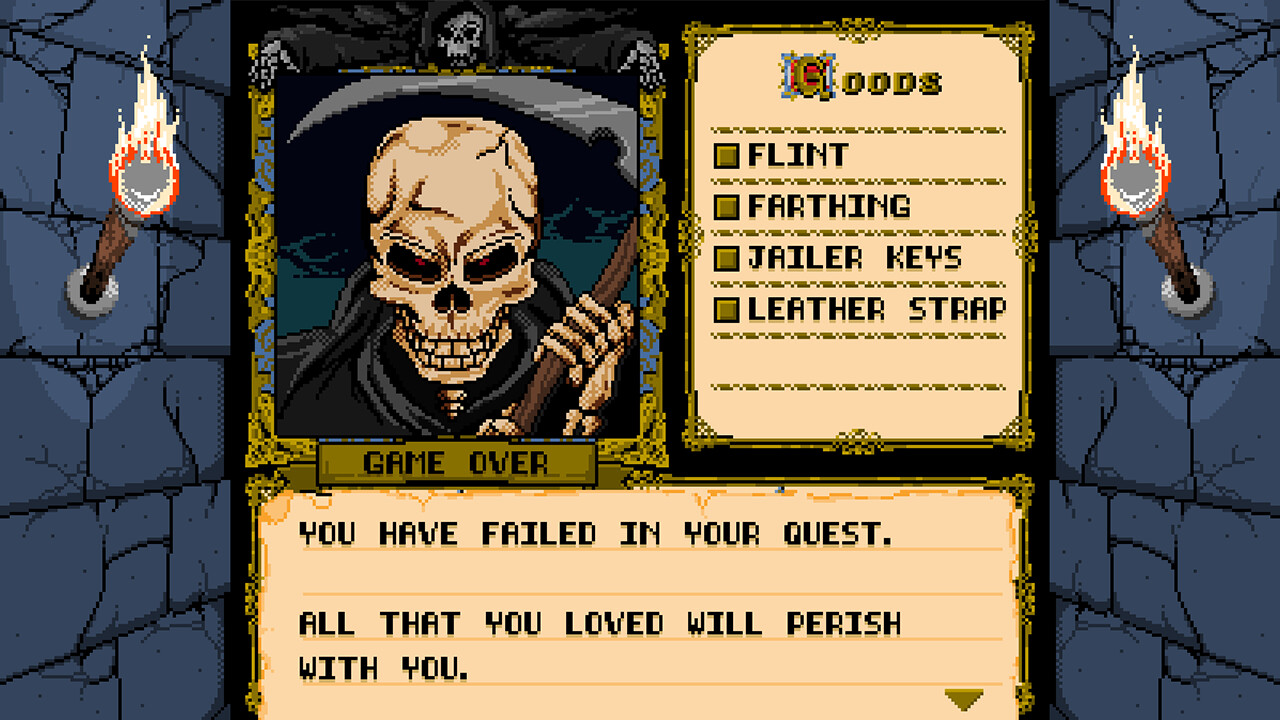
You are Del the Fenling, who gets roped into saving the kingdom from the evil influences that have been hanging over it since the events that transpired 35 years ago (OG Shadowgate). The gameplay consists of using a classic point & click verb-based interface to navigate. Use key on door, examine statue, hit jester, that sort of thing. It was lovely to just hang back in my chair, clicking on everything that looked interesting. Felt nostalgic.
Two things that kinda rubbed me the wrong way, one of which is 100% on me. First, I admit to grabbing a walkthrough here and there, because as it turns out I am woefully out of shape when it comes to these kinds of games. I have unlearned the skills of pixel hunting, hint parsing and straight up “trying everything until it works” that I used to have back when adventure games were basically all I played. It's very retro in that aspect, and I have been spoiled by modern games. It's not a knock against the game, rather my own learned laziness.
Second, and this is a bit of a spoiler, there are segments of the game that teleport Del to the worlds of Deja Vu and Uninvited, as a nostalgia play to ICOMs other works on the NES. This bugged me to no end. I've never played these and it took me out of a world that I enjoy. The Steam page calls these segments side quests, but I object. If they are mandatory parts of the main progression of the game there's nothing 'side' about them. I am gritting my teeth to not go off on a tangent on how Kickstarter incentives and rewards can muddle the final product. Maybe for another blog. There are so many actual Shadowgate games, couldn't they have just... ugh.
Aside from these things, Beyond Shadowgate is fantastic, a real treat and a real bastard. I recommend it to anyone yearning for an old-school adventure game.
Now, originally, the last game on the dock was Anno: Mutationem, but I ended up dropping it. This blog post is getting long in the tooth so I'll keep it brief:
The beauty of this game is skin deep. Underneath the lovely graphics and atmosphere lies a buggy game, with serviceable yet boring combat and nonsensical plot riddled with grammatical and spelling errors. I got about halfway until I couldn't bring myself to continue anymore. So instead, I pivoted to:

Fear the Spotlight
★★★★★
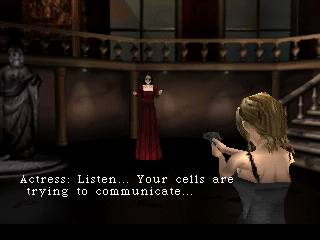
Horror games have been a staple for me ever since the first Alone in the Dark. Fear the Spotlight can easily slot itself between the greats of the PSX era.
The game contains two chapters, each following one of the two main characters, Vivian and Amy. The girls break into the school late at night to play around with the Ouija board, to summon spirits that were linked to a horrible fire that destroyed the school and its reputation years prior. Of course this summoning goes horribly wrong and the two get entangled into that horrific past, all while being haunted by ghosts and a monster with a big spotlight for a head.
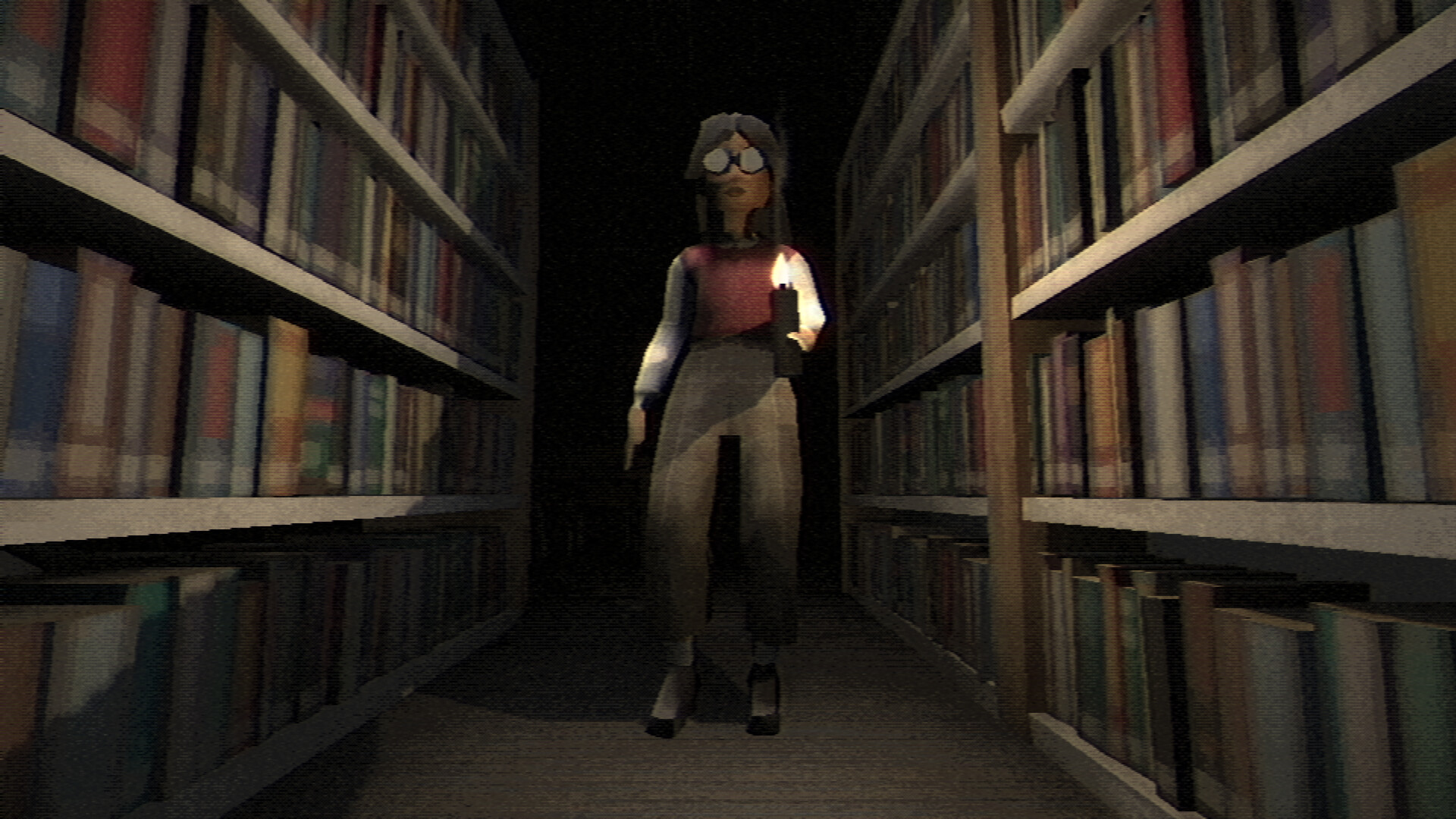
The game reminded me of the aesthetics of Silent Hill 1 on PSX, and it didn't take long for me to get sucked in. The low fidelity graphics have a way to set your mind on edge. Was that something moving in the darkness, or was it just one of those wobbly polygons? The low visibility, much like Silent Hill's fog, really keeps you in suspense. Aside from that, the game focuses on stealth, completely ignoring combat. It's a recipe for constant unease. The game knows how to ride that rollercoaster of suspense and not rely on cheap tactics like jump scares and blatant gore to get your heart rate up.
The story is well written and executed, slowly unraveling the events that lead up to the horrific fire that cost a ton of students their lives. The game isn't particularly long, but uses its time well to build everything up to their tragic conclusions, while keeping up the tense and gripping atmosphere emblematic of a good horror game.
It's a perfect example of how limitations set upon the developers leverage the final result. I can't recommend this game enough, especially if it's on sale.
And that's it! wow! This blog post was an absolute beast to write. If you ended up reading it all, kudos to you. I don't blame you if you found it a bit too much of a wall of text. It's no longer morning as I wrap this up. If you want to chat with me some more about this post, please toot https://gamerstavern.online/@sunie. Also, I started streaming on Peertube! the first archive is up here
Thanks for reading! See you soonie!

I write for fun, not for profit. It's not my job, nor do I intend to let myself get sucked in by gig-culture and turning my hobbies into jobs. That said, people have gladly supported me in the past, so if you feel inclined to do so, please follow my ko-fi link. Thank you very much either way <3